20 Types of Flour for Baking
Contrary to popular belief, flour isn’t just a simple baking ingredient — it’s the cornerstone of countless culinary masterpieces. Its properties also shape our favorite treats’ texture, taste, and look. But with lots of varieties out there, which one should you choose? In this post, we’ll talk about the types of flour for baking so you know when to use them.
From the standard all-purpose flour to the unique spelt flour, we’ll look at each type’s role in crafting different bakery goods and how selecting the right one can take your baking experience to new heights.
Types of Flour for Baking
- All-Purpose Flour
- Potato Flour
- Semolina Flour
- Double Zero (00) Flour
- Instant Flour
- Whole Wheat Flour
- Bread Flour
- Gluten-Free Flour
- Chickpea Flour
- Graham Flour
- Buckwheat Flour
- Oat Flour
- Pastry Flour
- Corn Flour
- Rye Flour
- Self-Rising Flour
- Spelt Flour
- Rice Flour
- Almond Flour
- Cake Flour
20 Types of Flour for Baking
Here are the most common types of flour for baking:
1. All-Purpose Flour

All-purpose flour serves as the backbone of a baker’s pantry. This flour is a blend of hard and soft wheat with a moderate protein content (approximately 9 to 12%). This provides a balance between strength and tenderness in baked goods.
The choice between bleached (treated to mature the flour quickly) and unbleached flour (naturally aged) may subtly change the final product’s texture and color. However, both varieties can be used interchangeably in most recipes.
Recommended use: as the name suggests, all-purpose flour is incredibly versatile. You can use it for various baking and cooking needs― from French bread and pizza dough to chocolate cookies and Japanese cheesecake.
2. Potato Flour
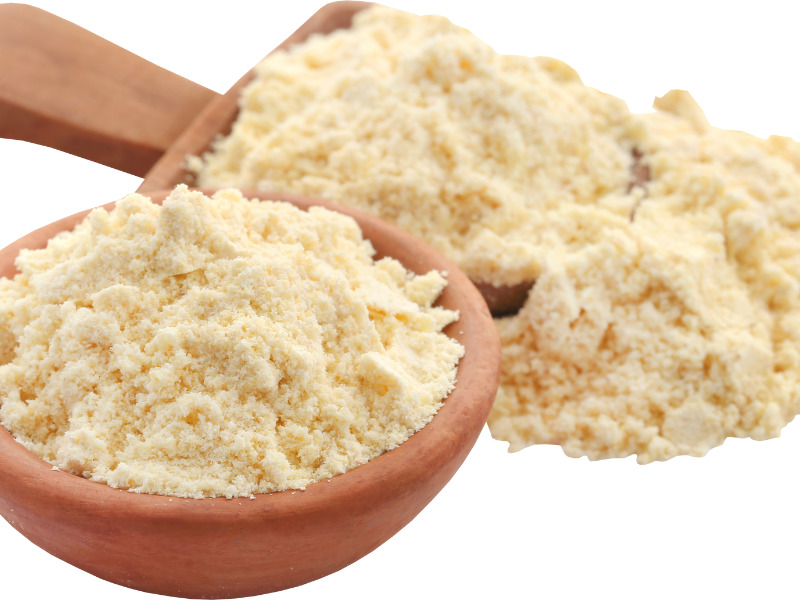
This one comes from cooked, dried, and finely ground peeled potatoes. People love to use it because it retains moisture well.
Potato flour also keeps the softness of baked goods and produces a tender crumb structure, especially in gluten-free recipes. Its high starch content can also help thicken soups and sauces while imparting a mild, earthy flavor. This flour can transform various dishes with its rich, distinctive potato taste.
Recommended use: potato flour shines in flour blends (both gluten-free and standard), gravies, pancakes, sauces, soups, and waffles. You can also use it in potato-based recipes and for thickening stock or stew, where its starchy nature comes in handy.
3. Semolina Flour

This one comes from the heart of durum wheat. Bakers love it for its substantial protein content, just like bread flour. Its rich gluten content contributes significantly to dough elasticity and extensibility, a feature crucial for pasta-making.
Besides pasta, cooks use semolina flour in traditional Italian baking, giving the baked goods a slightly sweet, complex flavor and a pleasingly coarse texture perfect for holding sauces.
Recommended use: use semolina flour for making focaccia, gnocchi, and pasta dough. You can also use it for dusting pizza peels to prevent sticking.
4. Double Zero (00) Flour

Doppio zero (double zero) flour, or 00 flour, is an Italian-style flour that’s finely milled. It comes from hard wheat, with a protein content roughly equivalent to all-purpose flour.
This fine grind and its moderate protein content make it incredibly pliable. Cooks need this feature to make doughs that need to be rolled or stretched. Double zero is also a staple in many traditional Italian recipes, imparting a light, delicate texture and flavor.
Recommended use: 00 flour works well when creating pasta dough, pizza dough, crackers, flatbreads, focaccia, and gnocchi. You can also make light and crispy fried food, such as tempura.
5. Instant Flour

Also known as Wondra, it is a pre-cooked, low-protein flour that’s finely milled, setting it apart from most flours. As its name suggests, instant flour quickly dissolves in hot and cold liquids. This makes it perfect for creating smooth, lump-free gravies and sauces. Its low protein content also contributes to a tender final product.
Recommended use: use it for coating foods before frying and making crepes, pie crusts, and gravies. You can also use it to create silky and light sauces and soups.
6. Whole Wheat Flour
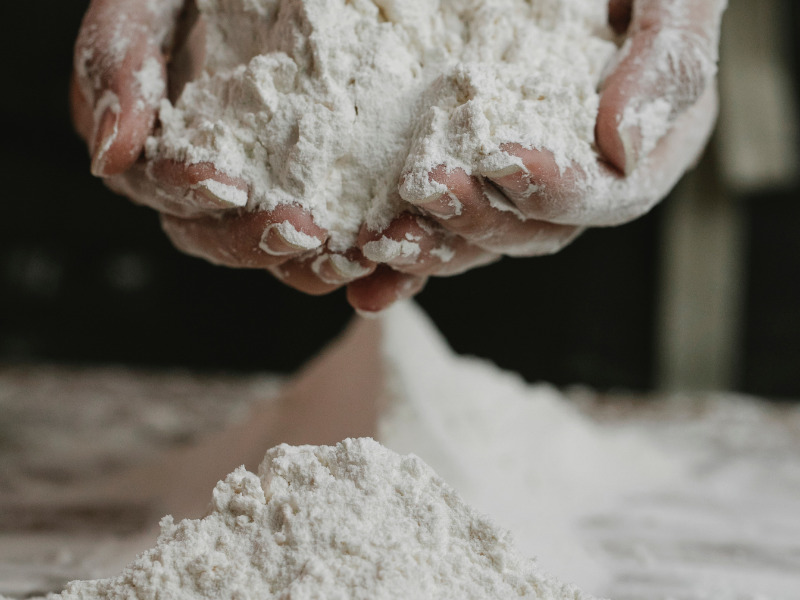
This one comes from milled wheat kernels (endosperm, germ, and bran), resulting in a nutrient-dense flour that retains all the goodness of whole grains. Whole wheat flour also features a hearty, nutty flavor and dense texture.
These add depth and character to baked goods. Because of its oil-rich wheat germ, whole wheat flour has a shorter shelf life than other flour types. Hence, it should be stored in a cool, dark place, ideally in the fridge or freezer, to maintain its freshness.
Recommended use: use this for baking bread, cookies, and muffins. You can also use it in cooking where a robust flavor is desired. Lastly, you can mix it with all-purpose flour to introduce more fiber and nutrients without sacrificing the lighter texture of white flour.
7. Bread Flour
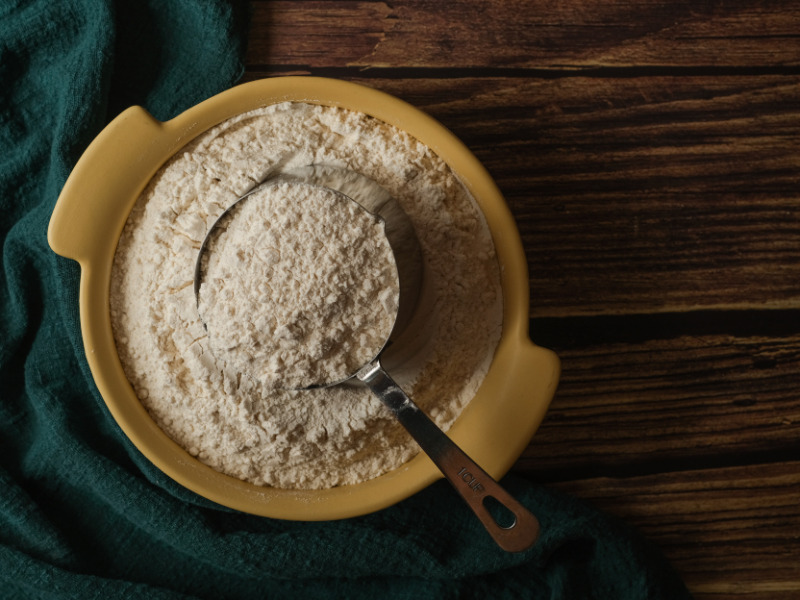
A remarkable member of the flour family, bread flour boasts a substantial protein content (up to 14%). Its protein content is crucial for the development of gluten, which gives yeast bread its distinct chewy texture and crispy brown crust.
Thanks to its delicate, granular texture and white color, bread flour helps yeast bread rise. It also improves its structure and crumbs, making it the go-to choice for professional bakers and home cooks.
Recommended use: Bread flour is your perfect companion for making chewy bagels, tender ham and cheese rolls, delectable pizza dough, and beautifully twisted pretzels. It also works well in recipes calling for strong doughs that can hold gas.
8. Gluten-Free Flour
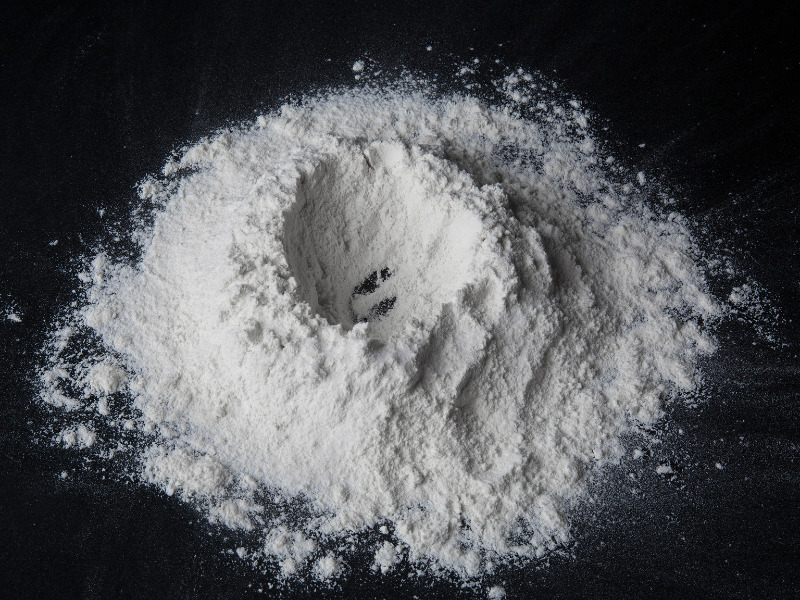
This type of flour for baking is made for people with gluten intolerance, celiac disease, or following a gluten-free diet. These unique blends, which may include a mix of rice flour, potato starch, almond flour, buckwheat flour, and xanthan gum, mimic the texture and functionality of all-purpose flour as closely as possible. While these flours can’t always be directly swapped with all-purpose flour, they provide the versatility people need.
Recommended use: gluten-free blends are ideal for everyday baking and cooking. These include gluten-free cakes, cookies, pancakes, and banana muffins.
9. Chickpea Flour
Also called gram or besan flour, chickpea flour is a gluten-free flour with high protein content. As its name suggests, it comes from ground chickpeas.
Chickpea flour imparts a rich, subtly sweet, and slightly nutty flavor. It also helps bind hydrated ingredients, making it a popular choice for quick-cooking batters and egg-free cooking.
Recommended use: chickpea flour is perfect for making delicate crepes, versatile flatbreads, tasty cakes, gluten-free roux, and fluffy pancakes. It’s also a staple in many Indian and Mediterranean recipes.
10. Graham Flour

Named in honor of its creator, Sylvester Graham, Graham flour is a whole wheat flour known for its coarse texture. Manufacturers make it by grinding the components of the wheat kernel separately, with the germ and bran receiving a finer grind than the endosperm. This results in a robust and hearty flavor. Due to its unrefined nature, it also imparts a sweet, slightly nutty flavor.
Recommended use: Graham flour is used in making graham crackers. It works well in any recipe requiring rustic, hearty, whole wheat flour. You can also add it to bread recipes for extra texture and flavor.
11. Buckwheat Flour
Despite its name, buckwheat flour doesn’t come from wheat. Instead, it comes from a fruit seed related to rhubarb and sorrel.
Given this, buckwheat flour is a gluten-free option with a robust, earthy flavor. It can’t be used alone in conventional baking due to its heavy texture and intense flavor. However, it adds nutrients when combined with other flours or included in gluten-free blends.
Recommended use: buckwheat flour can be used when making crepes, gluten-free baking blends, pancakes, traditional Japanese soba noodles, and waffles. It also adds a unique flavor profile and nutrient boost to your baked goods.
12. Oat Flour
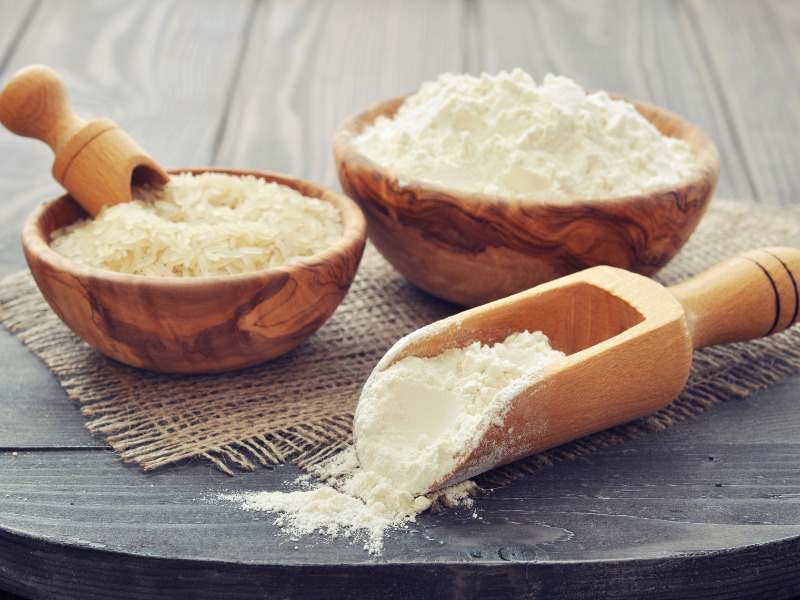
Sourced from finely ground whole oats, oat flour is loved by people for its nutritional richness and versatility in baking. It features a moist, tender texture and mildly sweet taste. It can also mimic many of all-purpose flour’s baking characteristics.
Although oats are naturally gluten-free, cross-contamination with gluten-containing grains can occur during processing. So, you should check for a gluten-free certification on the package if that’s a concern.
Recommended use: oat flour shines in gluten-free flour blends and non-yeast recipes. It is a beautiful addition to quick bread, pancakes, muffins, and cookies.
13. Pastry Flour
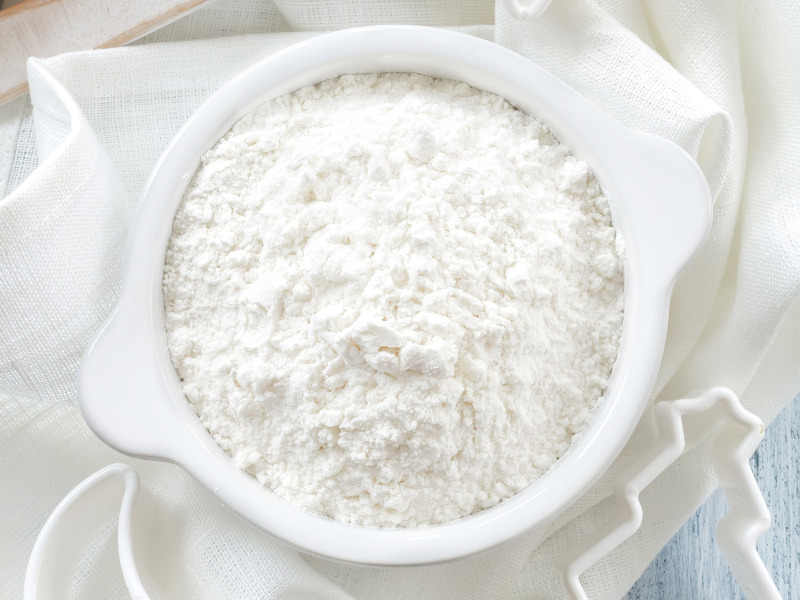
This type of flour for baking is a balance between cake flour and all-purpose flour (approximately 8 to 9% protein content). This finely milled flour crafted from soft wheat helps produce a light, delicate texture in baked goods without sacrificing structure.
Recommended use: pastry flour is the go-to choice for creating light, flaky pastries. It best makes cookies, crackers, croissants, egg pie crusts, and tarts. You can also use it in making muffins, biscuits, brownies, and butterscotch for tender crumbs.
14. Corn Flour
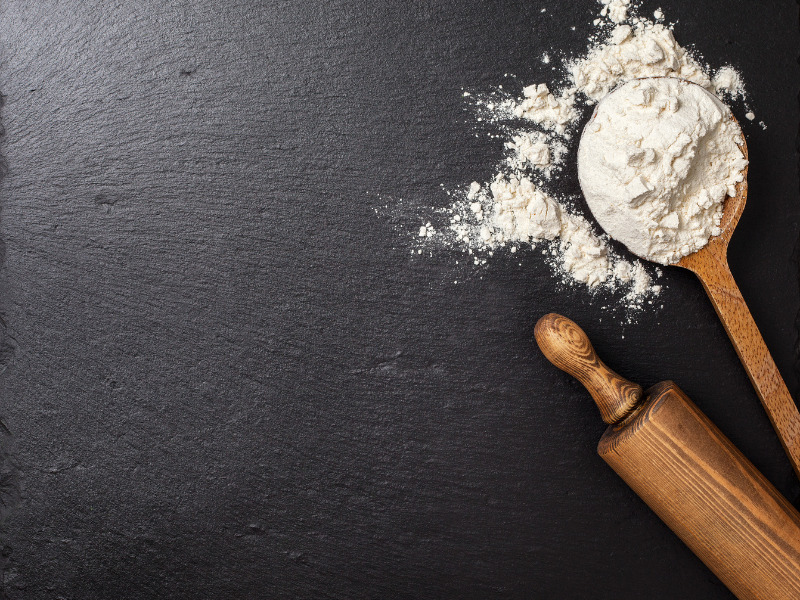
Corn flour is a gluten-free alternative, a fine powder milled from whole corn kernels. It gives a delightful corn flavor and tender texture to baked goods. Please don’t mistake it for cornmeal or cornstarch, which have different textures and uses. While it doesn’t provide the same rise as wheat flour because it lacks gluten, you can use it in gluten-free baking.
Recommended use: use it for breading, gluten-free baking, pancakes, and waffles. You can also use it to make tortillas and other corn-based bread.
15. Rye Flour
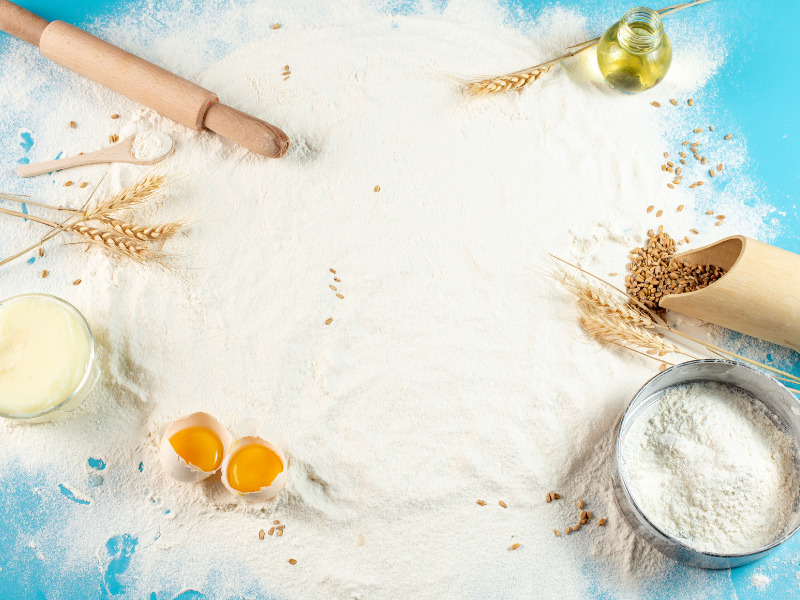
Derived from milled rye kernels, rye flour gives baked goods a slightly tangy flavor. Its protein content is lower than that of all-purpose flour. In addition, its gluten is less elastic, resulting in denser loaves with a closer crumb. Rye flour comes in various degrees of extraction, with dark rye containing more bran and germ than white or light rye.
Recommended use: use it to make robust, flavor-rich bread. You can also use it to make traditional rye crackers and in many artisan and sourdough bread recipes.
16. Self-Rising Flour
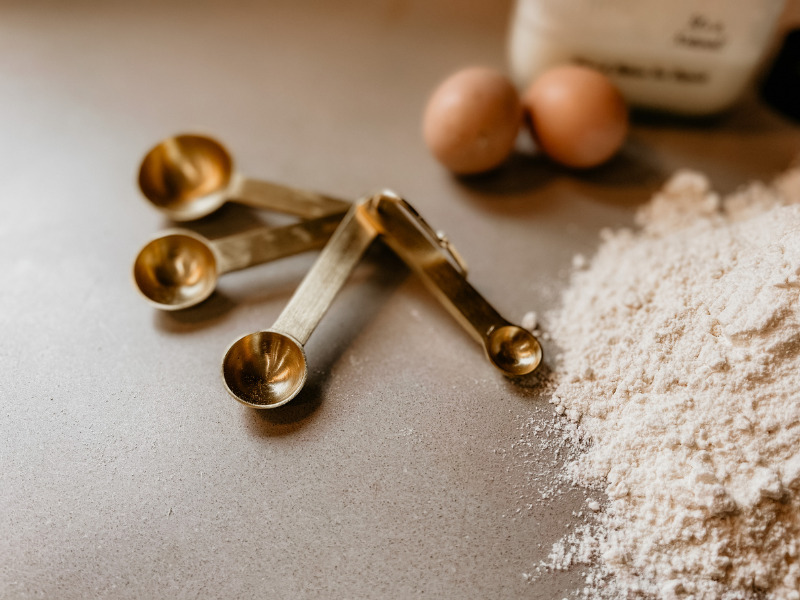
This ready-to-use variant combines flour, baking powder, and salt in proportions. Slightly lower in protein than all-purpose flour, this all-in-one blend provides a consistent leavening action. This results in a lighter, fluffier texture. However, due to its pre-added leavening agents, you can’t directly swap it with other flours without adjustments to the recipe’s additional leavening components.
Recommended use: use it to make light and fluffy southern biscuits, pancakes, and scones. It’s also a handy shortcut for quick bread and other gentle, uniform-rise recipes.
17. Spelt Flour
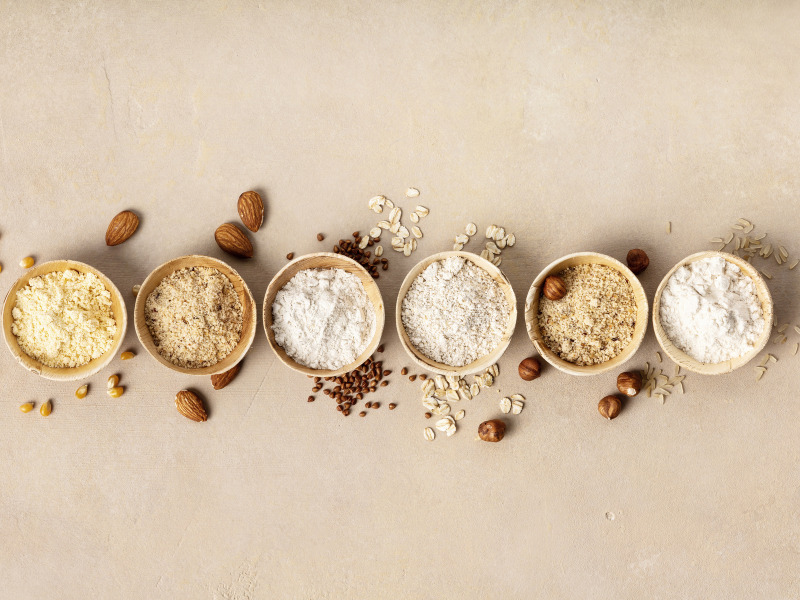
This variant comes from an ancient grain that belongs to the wheat family. Spelt flour features a mildly sweet and nutty flavor with moderate protein content. Despite being whole-grain flour, it acts more like refined all-purpose flour in baking. It also adds a more delicate texture than many other whole-grain flours.
Recommended use: use it as an alternative to all-purpose flour when baking cakes, cookies, and muffins. It also makes bread well since it offers a chewy texture and rich flavor.
18. Rice Flour
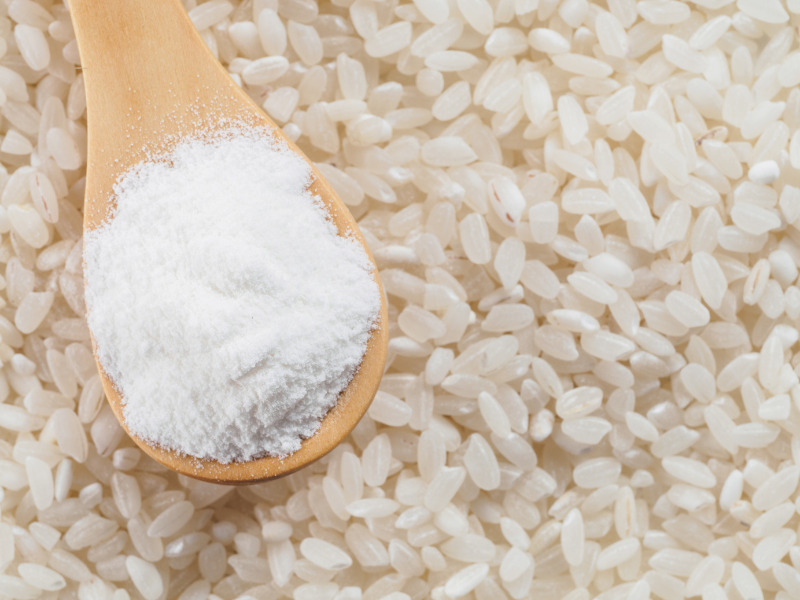
As its name suggests, rice flour comes from rice grains. This gluten-free option features a neutral flavor and light texture. It also serves as an excellent base for many gluten-free blends. However, it doesn’t absorb liquid as well as wheat flour. It also lacks gluten’s binding properties, so mix it with other flour or additives when baking.
Recommended use: this one is best used in gluten-free flour blends. You can also use it as breading flour for fried food. Lastly, you can use it to create rice noodles and rice cakes.
19. Almond Flour
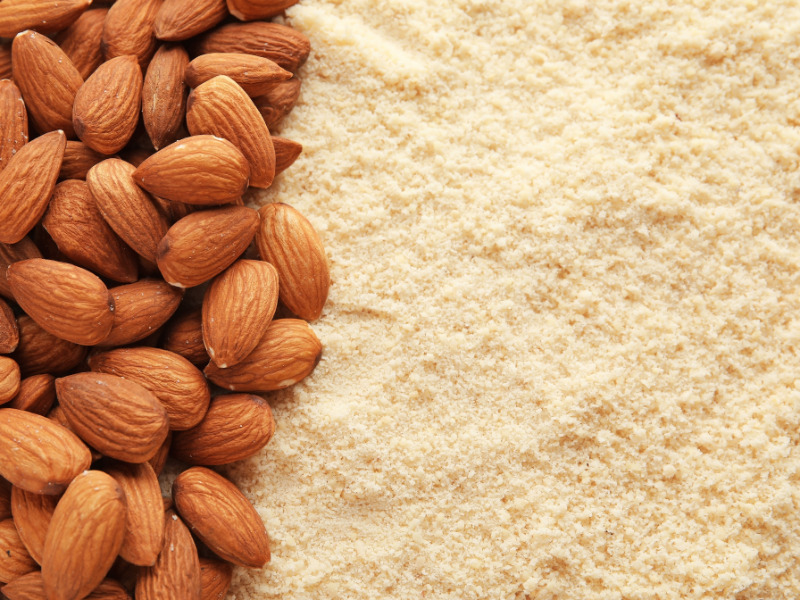
Created by grinding blanched almonds into a fine powder, almond flour is a nutty, nutrient-rich, gluten-free alternative to all-purpose flour. Although it lacks gluten’s elasticity and doesn’t cause the same rise as wheat flour, its slightly sweet flavor and moisture give baked goods a unique twist.
Recommended use: use it to make French macarons, bread, chocolate chip cookies, and yeast-based recipes. You can also use it in grain-free and paleo baking.
20. Cake Flour
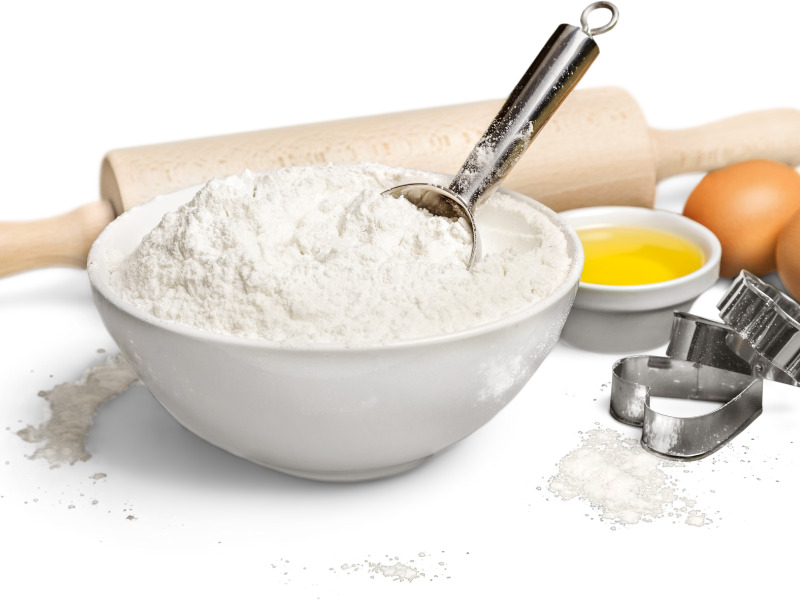
Cake flour is the softest of all flours, which has a low protein content (5 to 8%) and a wonderful texture. Chlorination changes the flour’s starch, allowing it to absorb more liquid and sugar. As a result, it produces moist, tender cakes with fine, dense crumbs.
Recommended use: this one is the top choice for baking cakes. With this, you can make light and fluffy chiffon cakes and moist, dense pound cakes. In addition, you can use it to make biscuits, pancakes, muffins, and scones.
Frequently Asked Questions
The four main types of flour are all-purpose flour, wheat flour, cake flour, and bread flour.
The different types of flour used in baking are all-purpose flour, potato flour, semolina flour, double zero (00) flour, instant flour, whole wheat flour, bread flour, gluten-free flour, chickpea flour, Graham flour, buckwheat flour, oat flour, pastry flour, corn flour, rye flour, self-rising flour, spelt flour, rice flour, almond flour, and cake flour.
Cake flour is best for baking because of its low protein content, which leads to softer baked treats. It also absorbs more liquid and sugar than all-purpose flour.
Conclusion
From the famous all-purpose flour to gluten-free alternatives like almond and oat flour, the types of flour for baking mentioned above open up a world of baking possibilities. Understanding each type of flour for baking lets you refine your recipes and elevate your baking prowess. Happy baking!
About HICAPS
Over the years, HICAPS has helped bakers and businesses make delicious products by offering ingredients like ChiffonAide Cake Oil, Magic Whizk Whipping Cream, Red Velvet Flavor Emulco, and Instabake Brownie Mix.
HICAPS also provides tools and resources to valued partners, such as the free “How to Increase Your Sales Amidst the Pandemic” E-book and free dealer locator that helps look for baking ingredients near me.
Want more free tips and tutorials? Follow us on Facebook at Hicaps Mktg. Corp. and on YouTube at HicapsTV.
Want to be one of our valued partners? Fill this form out. We are looking forward to talking to you soon!